

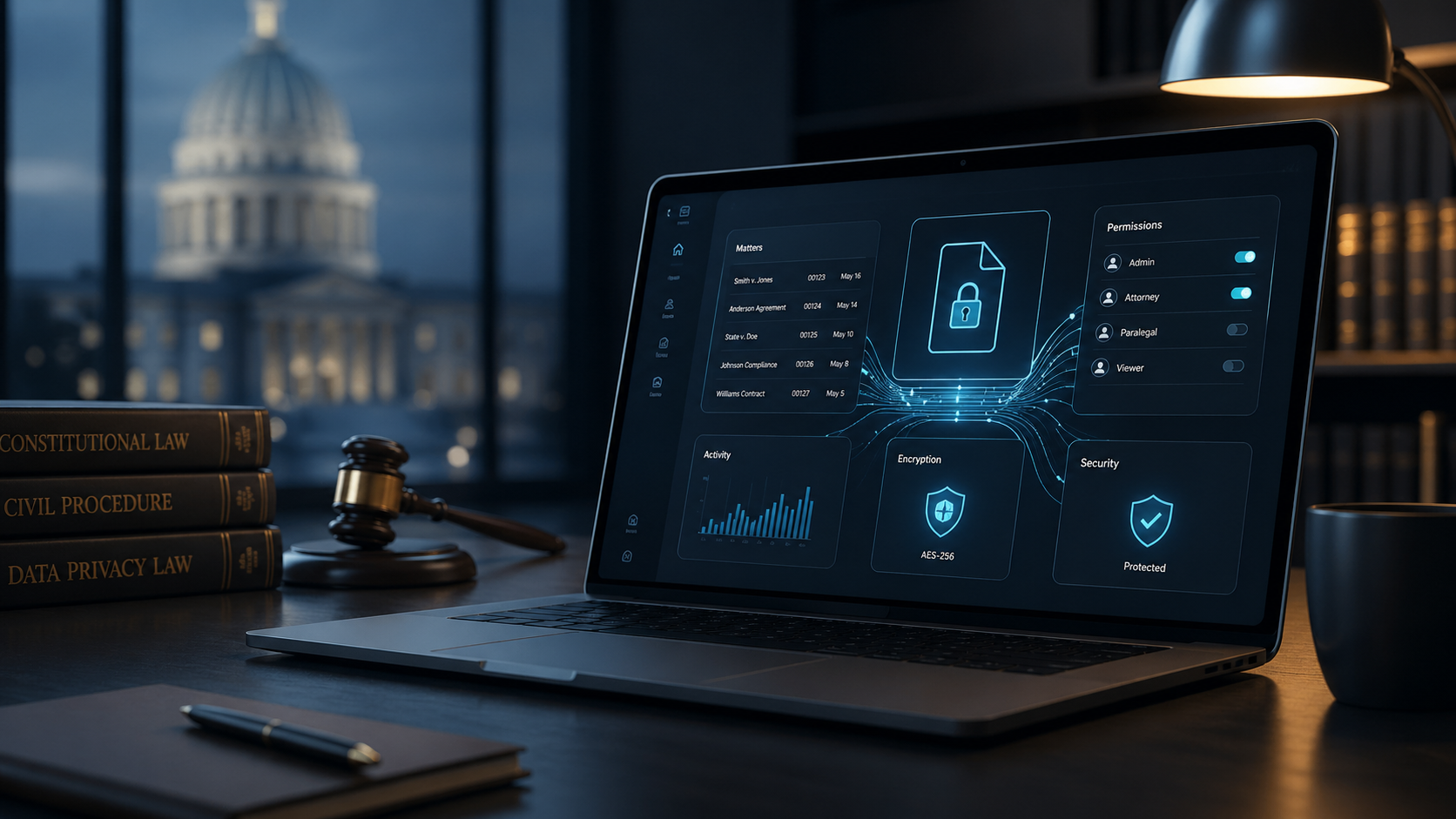
The Evolving Landscape of Legal Tech and Data Protection
Legal tech has quickly become the backbone of modern legal practice, powering everything from case management and e-discovery to contract analysis and litigation support. However, as these platforms handle increasing volumes of sensitive information, the need for stronger data protection standards in legal tech has never been more urgent. With high-profile breaches on the rise, regulators tightening requirements, and client expectations evolving, the gap between what legal tech does and how it is secured is growing at a dangerous pace.
Modern Legal Tech: A High-Risk Data Environment
Today’s legal platforms routinely store and process privileged communications, financial details, medical records, and trade secrets—all within integrated, cloud-based environments. These systems also manage personal data across borders, invoking simultaneous obligations under regulations like GDPR, CCPA, HIPAA, and more. Persistent audit trails and behavioral telemetry, such as document access logs, further complicate compliance, as these too can constitute personal data under privacy laws.
This concentration of valuable information has put the legal sector squarely in the crosshairs of cybercriminals. In the UK alone, reported legal sector data breaches surged by 39% between Q3 2023 and Q2 2024, affecting nearly 8 million individuals. Globally, annual data breach losses now top one trillion dollars, with law firms representing a disproportionate share due to the sensitive nature of their data holdings.
Why Current Security Standards Fall Short
Most existing legal tech security frameworks are rooted in outdated assumptions—think on-premises servers and limited remote access. Today’s reality is far more complex due to three structural shifts:
- Cloud-native, API-driven systems: Legal platforms now integrate document management, e-signature, client portals, and AI tools via APIs and third-party services. Each new integration expands the attack surface, often introducing shared-responsibility gaps and inconsistent access controls.
- AI and analytics inside workflows: AI-powered contract review, document analysis, and legal prediction tools aggregate massive volumes of client data. These systems raise challenging questions about model data retention, privacy, and explainability—areas where current standards rarely provide clear guidance.
- Human error at scale: Nearly 40% of legal sector breaches stem from mistakes like misdirected emails or misconfigured permissions. As legal tech becomes more powerful and accessible, the potential impact of such errors grows dramatically.
Regulatory and Ethical Pressures Intensify
Lawyers and legal tech vendors operate in a uniquely strict regulatory landscape. Professional rules, like the ABA’s Rule 1.6, treat failure to protect client data as potential misconduct, extending the duty of confidentiality to supervising technology providers. Data privacy laws such as GDPR and CCPA mandate “appropriate technical and organizational measures,” with severe penalties for noncompliance and delayed breach notifications. Sector-specific rules, like HIPAA, add further requirements for legal practices handling protected health information.
Recent enforcement trends show regulators intensifying their scrutiny, issuing substantial fines and conducting numerous inspections. Yet, only a fraction of firms are meeting all compliance requirements, underscoring the urgent need for stronger data protection standards in legal tech.
Key Vulnerabilities in Legal Tech Security
- Incomplete encryption: Many platforms tout “encryption at rest and in transit,” but often deploy weak configurations, shared keys, or inconsistent policies across subsystems, leaving gaps that attackers can exploit.
- Over-permissive access controls: Role-based access, group sharing, and ad-hoc exceptions create “access sprawl,” making it difficult to track who can see what and increasing breach risk—especially in sensitive matters like personal injury claims.
- Third-party and insider risk: Legal tech solutions frequently depend on subcontractors and are vulnerable to insider threats, yet vendor assessments often overlook sub-processors and lack continuous security monitoring.
- Limited resilience and recovery planning: Backups are not always immutable, geographically distributed, or tested for rapid restoration, heightening the risk of catastrophic data loss in the event of ransomware or sabotage.
What Stronger Data Protection Standards Should Deliver
To close these gaps, legal tech requires sector-specific, enforceable standards that reflect its unique sensitivity and regulatory context. These should include:
- Legal-grade security baselines: End-to-end encryption with strict key management, RBAC with least-privilege defaults, mandatory MFA, and third-party certifications that go beyond marketing claims.
- AI-specific data protection: Clear boundaries between operational and training data, safeguards against cross-matter leakage, and explainability for AI-driven recommendations that impact case outcomes.
- Continuous monitoring: Real-time monitoring of access, anomaly detection tailored to legal workflows, and automated containment mechanisms to swiftly address threats.
- Human-factor controls: Built-in safe send workflows, context-aware sharing warnings, and tiered approvals for high-risk actions, reducing reliance on user vigilance alone.
- Resilience and incident readiness: Regular incident response drills, tested recovery objectives, and contractually binding notification requirements that align with legal deadlines and commitments.
Shared Responsibility and the Future of Legal Tech Security
Ultimately, stronger data protection standards in legal tech are about more than compliance—they directly impact outcomes for clients and the integrity of the justice system. Lawyers, vendors, and regulators share responsibility for safeguarding the digital infrastructure essential to modern law. Legal teams must prioritize security due diligence as highly as case strategy, while vendors need to embed robust controls and transparency into their products. Regulators must evolve guidance to match the complexity of today’s technology. Only by holding legal tech to the highest data protection standards can the sector maintain client trust and uphold its ethical obligations in the digital age.
This article is inspired by content from Original Source. It has been rephrased for originality. Images are credited to the original source.