

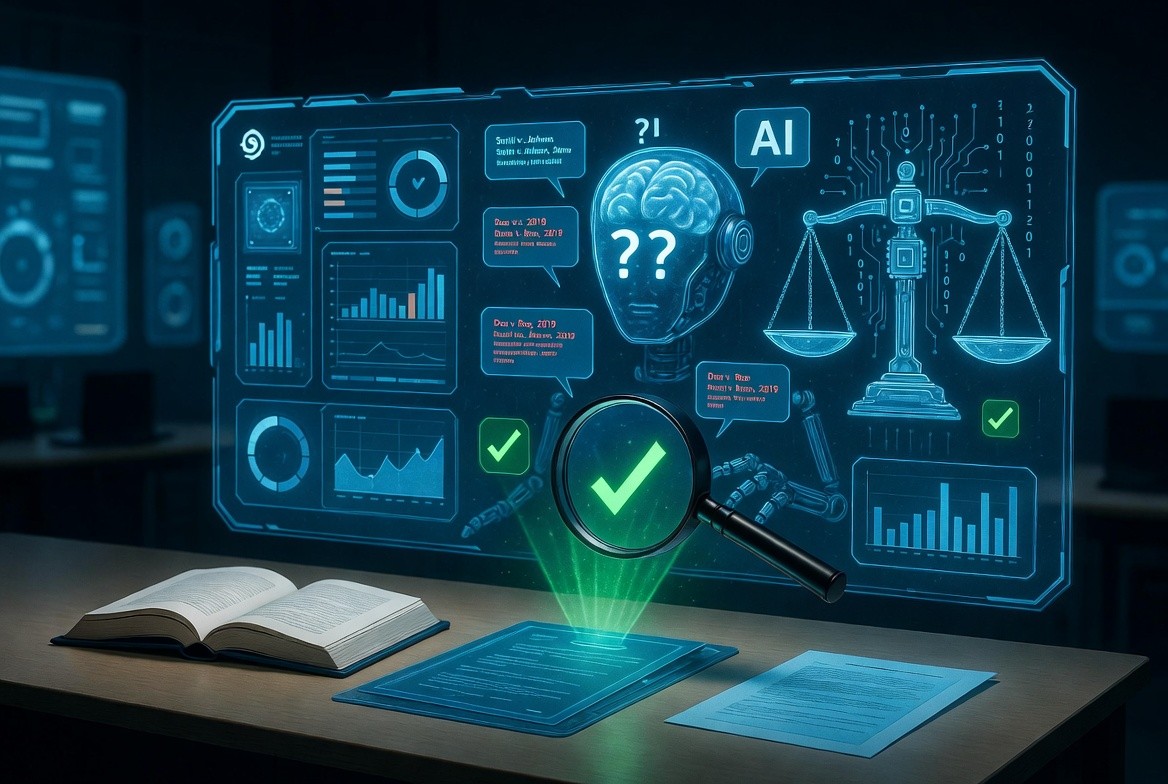
BrentWorks Introduces CiteSentinel for Reliable Legal Citation Verification
Legal citation verification has become a critical issue in today’s legal landscape, especially as generative AI tools are increasingly used in drafting legal briefs. BrentWorks, Inc., a legal tech startup, is addressing this challenge with the launch of CiteSentinel—a verification-first platform designed to identify and flag fabricated, misstated, or erroneous case law, statutes, and authorities in legal documents.
Why Legal Citation Verification Matters
The rise of generative AI in the legal profession has amplified the risks of inaccurate citations. Courts have begun sanctioning attorneys who file briefs with invented or erroneous citations, often generated by AI. As BrentWorks co-founder Brent Britton notes, “The legal profession is learning, in very public ways, that AI doesn’t just make mistakes, it confidently lies to your face.” Ensuring the accuracy of legal citations is now essential for attorneys aiming to maintain compliance and protect their reputations.
How CiteSentinel Works
CiteSentinel is engineered around a verification-first workflow. The platform scans legal documents to extract citation strings, then cross-references those citations against authoritative legal databases. Any citation that cannot be validated is flagged for further review. This process not only detects AI-generated errors but also helps attorneys avoid filing briefs with potentially sanctionable mistakes.
According to BrentWorks’ public materials and coverage in publications such as InvestorIdeas, IndyStar, and ItEdgeNews, CiteSentinel generates court-ready verification reports—a valuable asset for both compliance and litigation workflows. The platform’s privacy and security features ensure that sensitive legal documents remain protected throughout the verification process.
Technical Features and Workflow Integration
At its core, CiteSentinel leverages advanced citation parsing and canonicalization, normalizing citation formats (such as reporter-volume-page) before checking them against verified repositories. This technical approach minimizes false positives and ensures a defensible audit trail, which is crucial for legal compliance and court submissions.
One of the platform’s standout features is its human-in-the-loop review. By combining automated detection with human oversight, CiteSentinel aims to reduce errors and provide more reliable results. Attorneys can use the tool to scan not only their own filings but also those submitted by opposing counsel, further strengthening their case strategies.
Addressing Compliance and Risk Management
The legal industry’s increasing reliance on generative AI has created new compliance and reputational risks. Citation-verification tools like CiteSentinel offer a practical solution, allowing firms to incorporate citation checks into supervisory and quality-control workflows. By surfacing unverifiable citations before submission, attorneys can mitigate the risk of sanctions and improve the overall quality of their work.
Industry observers note that the adoption of legal citation verification tools is likely to accelerate as firms experiment with AI-powered drafting. Integrations with document management systems, APIs, and review interfaces will determine how seamlessly these tools fit into existing law firm operations.
What the Industry Is Watching
- Adoption signals: Uptake by mid-size and large law firms or partnerships with major legal research providers could indicate CiteSentinel’s growing market traction.
- Accuracy and coverage: The platform’s utility will depend on its false-positive and false-negative rates when compared to official court records and legal databases.
- Workflow fit: Easy integration with existing legal tech stacks and the availability of human-review interfaces will influence whether citation verification becomes a standard pre-filing step.
- Pricing and liability framing: How verification results are presented to courts—and whether vendors provide audit logs or expert affidavits—will shape litigation use cases.
The Future of Legal Citation Verification
The launch of CiteSentinel underscores the legal industry’s need for robust legal citation verification solutions, particularly as AI becomes more prevalent in legal drafting. By offering automated and human-reviewed verification, BrentWorks positions itself at the forefront of this evolving market. As more law firms seek to reduce compliance risk and increase the reliability of their filings, platforms like CiteSentinel are likely to become indispensable tools in the modern legal workflow.
In conclusion, legal citation verification is no longer optional—it is a fundamental safeguard in the age of AI-driven legal practice. CiteSentinel’s introduction marks a significant step forward, providing attorneys with the tools they need to ensure accuracy, reduce risk, and maintain their professional standing in a rapidly changing legal environment.
This article is inspired by content from Original Source. It has been rephrased for originality. Images are credited to the original source.