

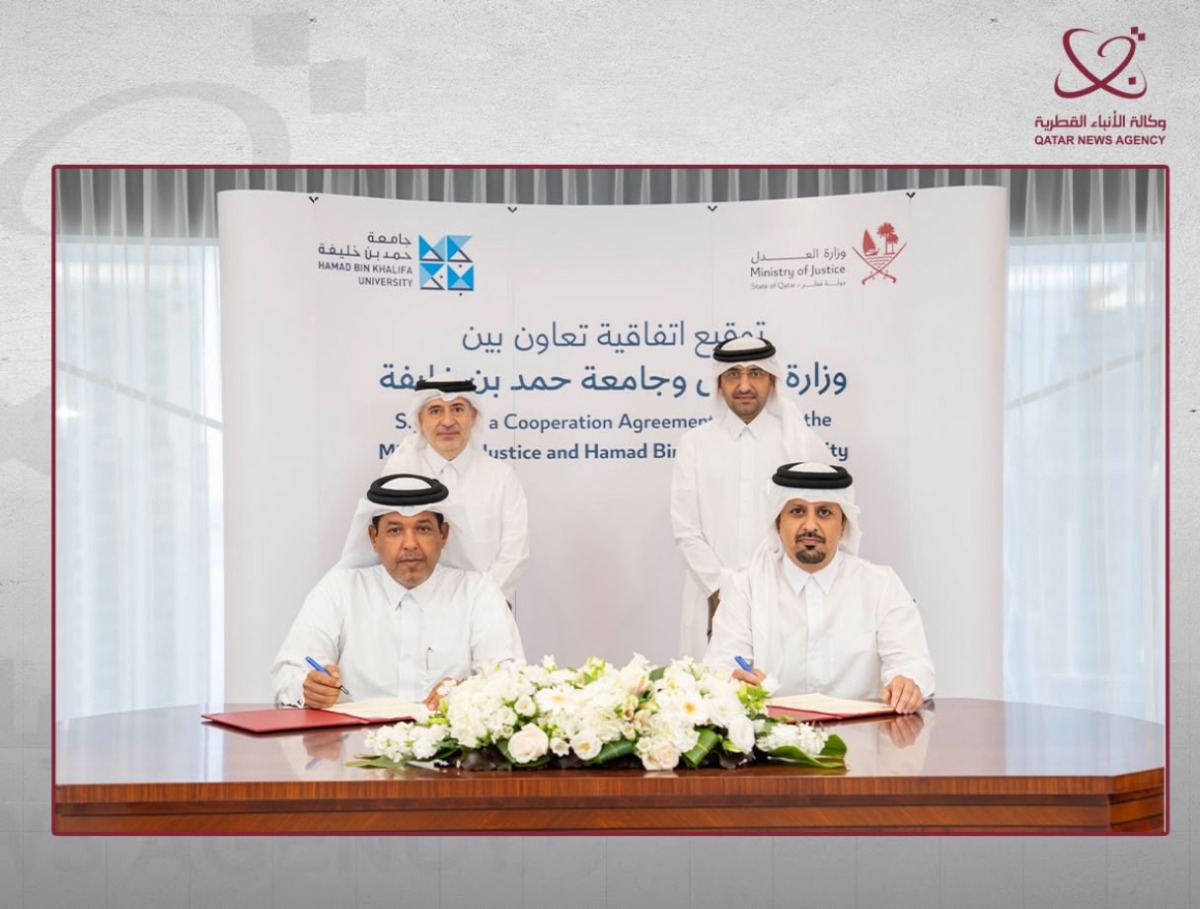
MOJ and HBKU Forge Strategic Partnership for Legal Research
The Ministry of Justice (MOJ) and Hamad Bin Khalifa University (HBKU) have entered into a significant cooperation agreement aimed at advancing legal research and enhancing national capacity building in Qatar. This collaboration is poised to reshape the landscape of legal scholarship and innovation within the country, supporting both institutional growth and the broader goal of developing a robust legal ecosystem.
Strengthening Legal Research Capabilities
The new agreement between the MOJ and HBKU formalizes a shared commitment to fostering excellence in legal research. Through this partnership, both institutions will collaborate on research projects, share expertise, and organize joint events such as conferences, workshops, and seminars. The focus is on generating high-quality research that addresses emerging legal challenges, supports legislative development, and contributes to the advancement of Qatar’s legal system.
By pooling their resources, the MOJ and HBKU aim to drive innovation in legal research methodologies, leveraging interdisciplinary approaches and encouraging the examination of contemporary legal issues that affect both the public and private sectors.
Empowering National Capacity Building
A core objective of the agreement is to build national capacity by nurturing the next generation of legal professionals and scholars. The partnership will create opportunities for students, researchers, and practitioners to participate in training programs, internships, and collaborative research initiatives. These activities are designed to equip participants with the skills and knowledge necessary to excel in the evolving legal landscape.
The focus on legal research aligns with Qatar’s broader vision of cultivating a well-informed and capable legal community, ready to address local and international legal challenges. This includes developing specialized expertise in areas such as legislative drafting, judicial processes, and regulatory compliance.
Driving Innovation Through Joint Initiatives
The cooperation agreement outlines a range of joint initiatives to be undertaken by the MOJ and HBKU. These include the development of research centers, the establishment of think tanks, and the launch of collaborative research projects that address strategic legal issues. The partnership also aims to facilitate knowledge exchange between academics, practitioners, and policymakers, ensuring that research outcomes have a tangible impact on legal practice and policy formulation.
By integrating academic rigor with practical insights, the MOJ and HBKU seek to produce research that informs decision-making at the highest levels and supports the ongoing modernization of Qatar’s legal framework.
Commitment to Sustainable Legal Development
The signing of the cooperation agreement underscores a mutual commitment to sustainable legal development in Qatar. Both the MOJ and HBKU recognize the importance of continuous learning and adaptation in the face of rapid technological and societal change. Their joint efforts in legal research are expected to yield innovative solutions to complex legal issues, enhance legislative processes, and contribute to the creation of a more transparent and efficient legal system.
This partnership also reflects Qatar’s dedication to fostering international collaboration, as insights gained from local research will be shared with the global legal community, further elevating the country’s reputation as a hub for legal scholarship and innovation.
Looking Ahead: The Future of Legal Research in Qatar
As the MOJ and HBKU embark on this collaborative journey, the future of legal research in Qatar appears bright. The agreement lays the foundation for ongoing cooperation, with both institutions committed to expanding the scope and impact of their joint initiatives. By prioritizing research excellence and capacity building, the partnership is set to play a pivotal role in shaping the next chapter of legal development in Qatar.
Ultimately, this alliance serves as a model for how academic and governmental institutions can work together to address pressing legal challenges, foster innovation, and build a more resilient and forward-looking legal ecosystem.
This article is inspired by content from Original Source. It has been rephrased for originality. Images are credited to the original source.