

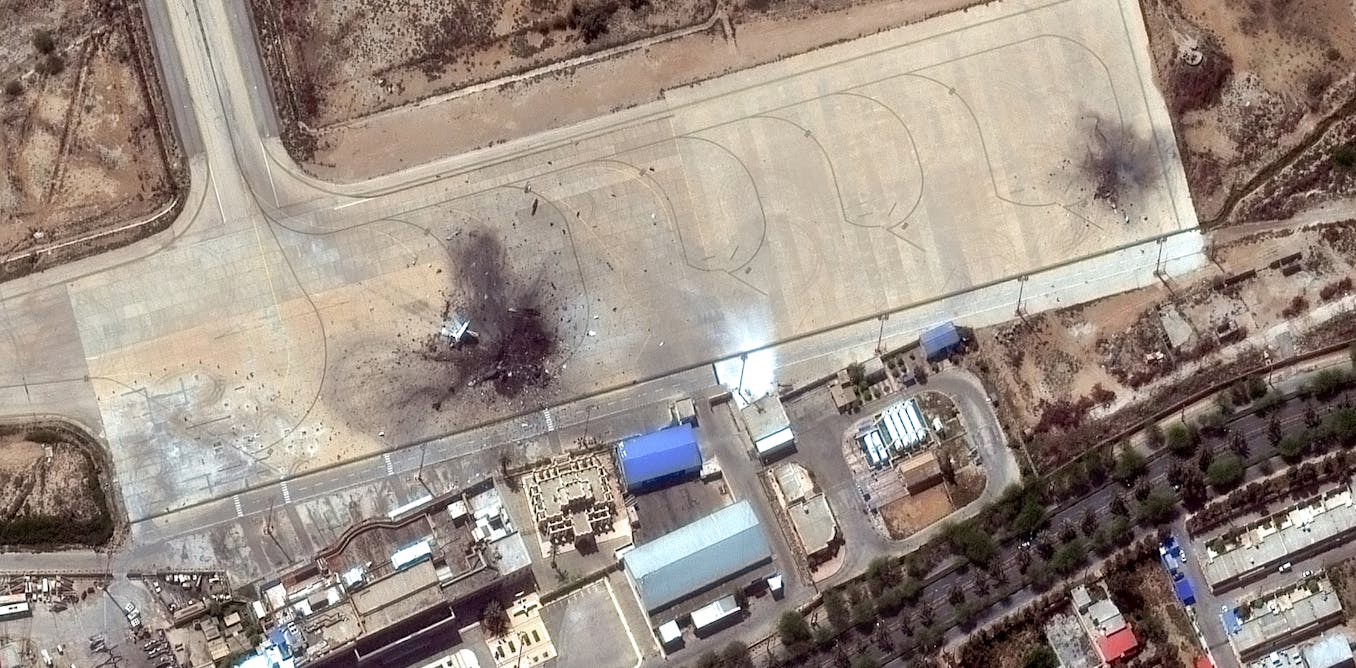
Commercial Satellites: The New Eyes and Targets in Modern Warfare
Commercial satellites have rapidly transformed the nature of military conflicts, as seen in the recent Iran conflict. When the United States and Israel initiated Operation Epic Fury against Iran, the world’s first glimpses of the attack didn’t come from government statements, but from commercial satellites. Companies like Planet Labs and Vantor provided high-resolution images revealing smoke over Tehran and damaged ships in Konarak, confirming strikes on vital military targets within hours. These commercial space assets are not only observers—they are also becoming targets in modern warfare.
During these operations, US officials reported that early strikes targeted Iran’s equivalent of Space Command, disrupting Tehran’s ability to coordinate satellite communications. Iran, in turn, employed sophisticated “spoofing” techniques to generate false GPS signals, misleading receivers and complicating military maneuvers. Simultaneously, US Space Command and Cyber Command launched “non-kinetic” attacks, which included jamming, hacking, and disrupting Iranian software systems. These silent, digital attacks can cripple critical infrastructure and military operations without the destruction typically associated with traditional warfare.
The Blurring Line Between Civilian and Military Space Technology
The rapid commercialisation of space technology is creating unprecedented challenges for international law. Commercial satellites now play a dual role, serving both civilian needs and military operations. For example, the same satellites that facilitate financial transactions, support hospitals, and manage logistics, are also used for guiding precision strikes and coordinating battlefield strategies. This dual-use characteristic blurs the line between civilian and military targets, complicating legal frameworks that traditionally separated the two.
These blurred lines are evident in the way Iran has extended non-kinetic tactics into civilian life. Amid anti-government protests and military strikes, Iran used GPS jamming and spoofing to disrupt Starlink terminals, essential tools for civilians and protesters seeking to communicate during internet blackouts. Meanwhile, companies like Planet Labs had to delay the release of satellite imagery to prevent real-time military use by adversaries, showing how private sector actors are directly shaping the conflict’s information landscape.
International Law Struggles to Keep Pace
Despite the critical role of commercial satellites, international law has not kept up with the speed of technological change. Treaties such as the United Nations’ Outer Space Treaty and international humanitarian law theoretically apply to space warfare, but real-world practices are evolving much faster than these legal frameworks. The International Committee of the Red Cross has repeatedly warned that interference with satellites can have devastating effects on civilians by disrupting power grids, navigation systems, emergency services, and humanitarian relief operations.
One of the most pressing legal challenges is defining what constitutes a legitimate military target among dual-use satellites. Legal experts generally argue that satellites providing essential civilian services should be presumed non-military unless direct military involvement is clear. However, this principle is tested daily in modern conflicts, where the boundaries between civilian and military use are constantly shifting.
Private Companies and the Shifting Landscape of Responsibility
The growing involvement of private companies in military operations via commercial satellites also raises questions about political neutrality and accountability. If a company based in a neutral country supplies satellite data that enables military operations, that country may face diplomatic pressure or even accusations of complicity. The reality is that the law has not caught up with these commercial and geopolitical complexities, leaving companies like Planet Labs to craft their own policies during wartime, such as delaying imagery releases to non-government users while granting immediate access to military clients.
Additionally, non-kinetic cyber-attacks present a legal grey zone. These attacks can disable military systems without causing physical destruction, potentially falling below the threshold of “armed attack” under international law. States may exploit these ambiguities to gain strategic advantages without triggering formal conflict declarations, further complicating the legal landscape.
The Future: Evolving Norms Without New Treaties
As the Iran conflict demonstrates, a new treaty governing military space operations is highly unlikely amid rising geopolitical tensions. Instead, new legal norms may emerge organically from the behaviors of governments, companies, and military actors navigating these uncharted territories. For now, the boundaries of acceptable conduct in space warfare are being defined in real-time—by those who possess and operate commercial satellites—rather than by formal legal agreements.
Ultimately, the battlefield is evolving faster than lawmakers can respond. Commercial satellites have become critical tools for both military and civilian actors, reshaping not only the conduct of war but also the legal and ethical frameworks that govern it.
This article is inspired by content from Original Source. It has been rephrased for originality. Images are credited to the original source.